Music can influence how customers experience a business. It can make a restaurant feel welcoming, a retail store feel energetic or a spa feel peaceful. However, playing music in a commercial space involves more than choosing a playlist. Businesses must also understand whether they have permission to use that music publicly.
Many owners assume that a personal streaming account or downloaded song collection can be used inside a shop, hotel, gym or café. In many cases, personal-use subscriptions do not provide commercial playback rights.
Personal Streaming and Commercial Playback Are Different
Consumer streaming services are usually designed for private listening. Playing the same music for customers, employees or visitors in a commercial venue can be treated differently because it may count as a public performance.
This means a business may require additional permissions depending on its country, venue type and intended use. Paying for a personal subscription does not automatically make the account suitable for commercial playback.
What Licensed Commercial Music Means
Licensed commercial music refers to songs that a business is authorized to play publicly under defined terms. A license may cover public-performance rights, access to approved catalogs and use in one or more locations.
A professional Commercial Music Licensing service can help businesses access music intended for public environments. However, coverage differs between providers, so companies should read the conditions carefully.
A commercial music plan may include:
-
Permission to play music in supported business locations
-
Access to playlists designed for commercial spaces
-
Scheduling tools for different times of day
-
Documentation confirming authorized use
-
Controls for staff members or branch managers
-
Support for multiple locations or music zones
The provider should clearly explain which rights are included and which activities remain restricted.
Royalty-Free Does Not Always Mean Free
The term royalty-free is commonly misunderstood. It does not always mean that music is free of charge or unrestricted. Businesses may still need to purchase a license, pay a subscription or agree to specific conditions.
Companies looking for Royalty Free Music for Business Use should confirm that the license allows public playback in a commercial venue. Some royalty-free music is licensed only for podcasts, videos, advertisements or social media.
Before using a royalty-free track, a business should check:
-
Whether commercial public performance is permitted
-
How many locations are covered
-
Whether the license expires
-
Whether attribution is required
-
Whether the track can be used in advertisements
-
Whether it can appear in social media or online videos
Different Uses May Need Different Permissions
A license that allows music inside a restaurant may not permit the same song in a promotional video. Similarly, music approved for a hotel lobby may not cover a ticketed event, fitness class or live performance.
Businesses should identify every intended use before choosing a provider. Common examples include background music in a venue, reception playlists, restaurant soundtracks, fitness sessions, social media videos and advertising campaigns.
A reliable provider should explain which uses are included and whether any additional license is needed.
Licensing Rules Vary by Country
Commercial music rules differ across territories. Different countries may involve separate rights holders, collecting organizations or local requirements. A license that works in one country may not automatically apply elsewhere.
This is particularly important for franchises, hotel groups and companies with international branches. Before subscribing, decision-makers should ask:
-
Which countries and regions are covered?
-
Are public-performance rights included?
-
Can one plan cover several branches?
-
Is local registration still required?
-
Will the provider supply proof of licensing?
-
What support is available if a claim is raised?
Managed Music Services Offer More Than Licensing
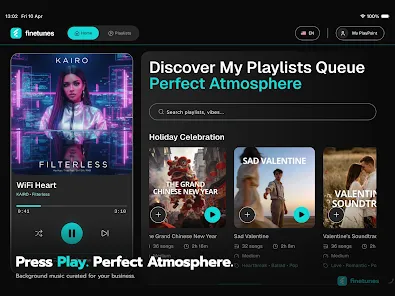
A commercial music platform may also provide curated playlists, automated scheduling and central control. These features help businesses maintain a suitable atmosphere without asking employees to manage personal accounts.
A managed service can help a company keep music consistent with its brand, prevent unsuitable song choices, change playlists throughout the day and control playback across several locations. It can also reduce staff involvement and provide records of authorized use.
Final Thoughts
Playing music in a commercial setting requires more planning than many businesses expect. Personal subscriptions, royalty-free tracks and commercial music services all have different conditions.
Before choosing a solution, businesses should confirm where the music can be played, which rights are included and whether every intended use is covered. By selecting a transparent provider and reviewing the license carefully, a company can create the right atmosphere while managing its commercial music responsibilities effectively.