A 90-Year-Old Sold a 100-Year Insurance Policy: Why Blaming the Bank Alone Misses the Bigger Problem
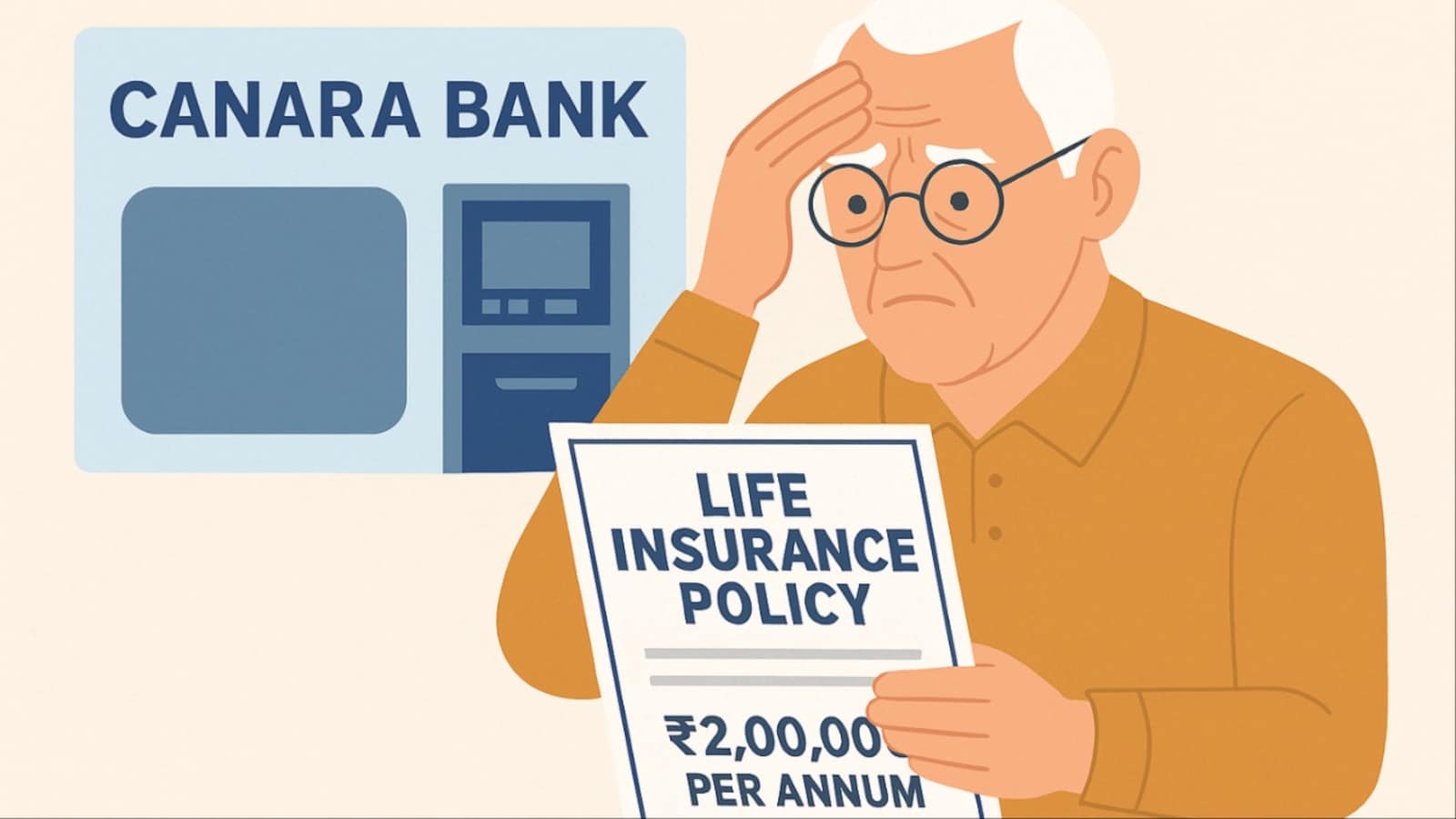
A recent case involving a 90-year-old man being sold a long-term insurance policy maturing in the year 2124 has triggered widespread outrage. The details, which surfaced through a viral social media post, appeared almost unbelievable: a nonagenarian issued a policy with a maturity timeline extending well beyond any realistic life expectancy. After public attention mounted, the concerned bank reportedly stepped in to resolve the matter.
At first glance, the episode seems like a clear case of mis-selling by a financial institution. Yet the deeper issue extends beyond a single bank, a single agent, or a single transaction. The incident highlights systemic weaknesses in how financial products are distributed, regulated, understood, and monitored in India’s rapidly expanding banking and insurance ecosystem.
Table of Contents
ToggleThe Anatomy of Mis-Selling
Mis-selling occurs when financial products are sold without fully explaining their features, risks, costs, or suitability to the buyer. In many cases, customers are persuaded to purchase products that do not align with their age, income, risk appetite, or financial goals.
In the case of a 90-year-old being sold a policy maturing in 2124, basic suitability standards appear to have been ignored. Insurance policies—particularly long-term life or savings-linked products—are generally structured around income protection, wealth accumulation, or estate planning. Selling such a policy to someone at an advanced age raises serious questions about whether appropriate needs analysis was conducted.
Regulators in India, including the Reserve Bank of India (RBI) and the Insurance Regulatory and Development Authority of India (IRDAI), have repeatedly issued guidelines emphasizing suitability, transparency, and informed consent in financial product sales. Yet cases of mis-selling continue to surface.
The Pressure of Sales Targets
One structural driver of mis-selling is the aggressive sales culture embedded in parts of the banking and insurance sectors. Bank employees and relationship managers often operate under performance targets tied to cross-selling insurance, mutual funds, or investment-linked products.
In such an environment, incentives may inadvertently encourage pushing products regardless of client suitability. While most institutions have compliance mechanisms in place, oversight can falter when frontline sales staff prioritize target achievement over long-term customer interest.
This does not absolve banks of responsibility. However, it highlights that the problem is not always about rogue individuals but about systemic incentive structures that reward volume over prudence.
The Role of Financial Literacy
Blaming banks alone also overlooks another crucial dimension: financial literacy. India has made significant progress in expanding banking access, particularly through initiatives promoting financial inclusion. Millions of elderly customers, rural residents, and first-time account holders have entered the formal financial system in recent years.
However, access does not automatically translate into understanding. Many customers struggle to interpret complex policy documents filled with technical language. Terms such as maturity value, surrender charges, lock-in period, and premium allocation charges can be confusing—even for educated individuals.
In cases involving elderly clients, the risk of misunderstanding increases. Seniors may rely heavily on verbal assurances rather than reading lengthy documentation. In such situations, informed consent becomes questionable if explanations are incomplete or overly simplified.
Strengthening financial literacy programs—especially for senior citizens—must be part of the solution.
Regulatory Safeguards and Gaps
India’s regulatory framework already includes safeguards intended to prevent such cases. Insurance policies generally require documentation, identity verification, and confirmation of key terms. Many banks record calls during tele-sales interactions, and “free-look” periods allow customers to cancel policies within a specified timeframe.
However, compliance in spirit can differ from compliance in form. A customer may sign documents without fully grasping their implications. Free-look windows may pass unnoticed if policy documents are not carefully reviewed.
Regulators have also introduced measures such as suitability norms, mandatory benefit illustrations, and grievance redress mechanisms. Yet enforcement effectiveness depends on institutional culture and customer awareness.
The viral social media post that brought this case to light suggests another reality: grievances often gain traction only when public attention amplifies them. Ideally, internal complaint mechanisms should resolve such issues without requiring public pressure.
The Human Dimension
Beyond institutional accountability, there is a human dimension to consider. Elderly customers often hold deep trust in their banks. Many have maintained relationships spanning decades. When that trust appears breached, the sense of betrayal can be profound.
In this case, the optics were particularly troubling. A 90-year-old purchasing a policy maturing in 2124 naturally invites skepticism about whether proper advice was given. Even if technical compliance boxes were ticked, ethical considerations demand higher standards.
Financial institutions must recognize that dealing with senior citizens requires heightened sensitivity. Age-appropriate suitability checks, mandatory counseling for complex products, and simplified communication can reduce such risks.
The Social Media Effect
The bank reportedly resolved the matter after the issue gained visibility online. Social media has increasingly become a platform for grievance escalation. Public scrutiny can accelerate institutional response.
However, reliance on virality as a corrective mechanism is problematic. Not every customer has access to digital platforms or the ability to mobilize public opinion. Effective grievance redress systems should function independently of social media amplification.
Shared Responsibility
While the bank bears primary responsibility for ensuring appropriate sales practices, broader accountability spans multiple stakeholders:
-
Financial Institutions: Must strengthen internal controls, align incentives with long-term customer welfare, and train staff rigorously.
-
Regulators: Need to enforce suitability norms more stringently and periodically audit high-risk categories such as elderly clients.
-
Customers and Families: Should remain vigilant, review documents carefully, and seek clarification before signing.
-
Society at Large: Must prioritize financial education as a foundational life skill.
Assigning blame solely to the bank risks oversimplifying a multifaceted issue. Mis-selling persists not only because of institutional failures but also because of systemic pressures, literacy gaps, and weak enforcement culture.
The Larger Pattern
Cases of mis-selling are not isolated incidents. Over the years, complaints have surfaced regarding unsuitable insurance policies, bundled financial products, and opaque fee structures. Each case highlights vulnerabilities within a system balancing rapid expansion with consumer protection.
India’s financial sector has grown dramatically, integrating technology, expanding reach, and diversifying products. With growth comes complexity. Ensuring that innovation does not outpace consumer understanding is a continuous challenge.
Moving Forward
Preventing similar incidents requires a shift from reactive correction to proactive prevention. Some potential measures include:
-
Mandatory suitability assessments for elderly clients above a certain age.
-
Simplified, standardized disclosure formats for complex policies.
-
Cooling-off counseling sessions before issuing long-tenure products to senior citizens.
-
Stronger penalties for documented cases of deliberate mis-selling.
-
Expansion of financial literacy programs tailored to retirees and pensioners.
Institutions must view customer trust as a long-term asset, not a short-term sales opportunity.
Conclusion
The story of a 90-year-old man being sold a policy maturing in 2124 may sound extraordinary, but it reflects deeper, recurring issues within the financial system. While the bank’s role in the transaction deserves scrutiny, stopping at institutional blame alone risks missing the broader structural, regulatory, and educational dimensions of the problem.
True reform requires collective introspection. Financial inclusion must be matched by financial understanding. Sales targets must be balanced with ethical responsibility. And grievance redress must function effectively without requiring viral intervention.
In the end, the incident serves as a reminder that safeguarding consumers—especially the elderly—demands vigilance not only from banks but from regulators, families, and society as a whole.
afrikato afrikato afrikato afrikato afrikato afrikato afrikato afrikato afrikato afrikato afrikato afrikato afrikato afrikato afrikato afrikato afrikato afrikato afrikato afrikato afrikato afrikato afrikato afrikato afrikato afrikato afrikato afrikato afrikato afrikato afrikato afrikato afrikato afrikato afrikato afrikato afrikato afrikato afrikato afrikato afrikato afrikato afrikato afrikato afrikato afrikato afrikato afrikato afrikato afrikato afrikato afrikato afrikato afrikato afrikato afrikato afrikato afrikato afrikato afrikato afrikato afrikato afrikato afrikato afrikato afrikato afrikato afrikato afrikato afrikato afrikato afrikato afrikato afrikato afrikato afrikato afrikato afrikato afrikato afrikato afrikato afrikato afrikato afrikato afrikato afrikato afrikato afrikato afrikato afrikato afrikato afrikato afrikato afrikato afrikato afrikato afrikato afrikato afrikato afrikato afrikato afrikato afrikato afrikato afrikato afrikato afrikato afrikato afrikato afrikato afrikato afrikato afrikato afrikato afrikato afrikato afrikato afrikato afrikato afrikato afrikato afrikato afrikato afrikato afrikato afrikato afrikato afrikato afrikato afrikato afrikato afrikato afrikato afrikato afrikato afrikato afrikato afrikato afrikato afrikato afrikato afrikato afrikato afrikato afrikato afrikato afrikato afrikato afrikato afrikato afrikato afrikato afrikato afrikato afrikato afrikato afrikato afrikato afrikato afrikato afrikato afrikato afrikato afrikato afrikato afrikato afrikato