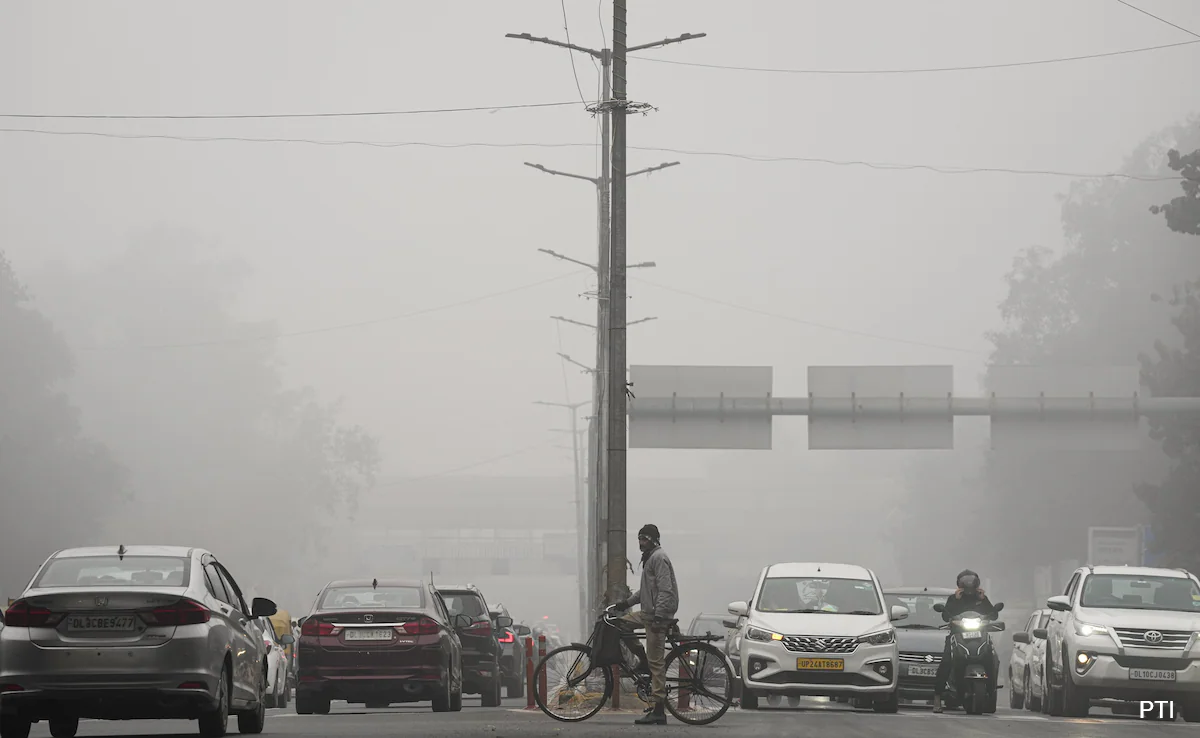
Dense winter fog coupled with persistent air pollution blanketed Delhi-NCR on Thursday morning, significantly reducing visibility across large parts of the region. The national capital woke up to thick smog, continuing a trend seen over the past several days, as air quality remained firmly in the “very poor” category. Early readings showed the Air Quality Index hovering around 358, highlighting the severity of pollution despite a marginal dip from previous days.
A foggy start to the day
Several areas across Delhi, Noida, Ghaziabad, Gurugram, and Faridabad experienced extremely low visibility during the early morning hours. Roads, flyovers, and open stretches were enveloped in dense fog, making driving conditions hazardous and slowing traffic movement. Visuals from different parts of the capital showed streetlights barely visible through the haze, while motorists were seen using fog lights and driving at reduced speeds.
The thick fog also affected daily routines, particularly for office-goers and school transport services, as commuting times increased across the region. Authorities urged drivers to exercise caution, maintain safe distances, and avoid unnecessary travel during the worst hours of reduced visibility.
Air quality remains a concern
While visibility issues were the most immediate impact, air pollution continued to pose a serious health concern. An AQI reading in the very poor category indicates high levels of particulate matter, especially PM2.5 and PM10, which can penetrate deep into the lungs. Such conditions can aggravate respiratory problems, trigger asthma attacks, and increase the risk of cardiovascular stress, particularly among children, the elderly, and individuals with pre-existing health conditions.
Experts note that winter meteorological conditions play a major role in worsening pollution levels. Calm winds, lower temperatures, and temperature inversion prevent pollutants from dispersing, allowing them to accumulate close to the ground. As a result, even a slight increase in emissions can quickly degrade air quality.
Impact on flights and transport
Low visibility had a noticeable impact on air and rail traffic as well. Several flights at Delhi’s airport were delayed or rescheduled due to fog-related conditions, while airlines advised passengers to check flight status before heading to the airport. Low-visibility procedures were implemented to ensure safety, a common practice during dense fog episodes in winter.
Train services also experienced delays, with fog affecting visibility along railway tracks in northern India. Road travel became slower across highways and arterial roads connecting Delhi to neighboring cities, contributing to congestion during peak hours.
casinopeers.com | filmy-mantra.com | casinonewstime.com
bet-money.com | bluephotoidea.com
Why winter worsens pollution in Delhi-NCR
Delhi-NCR experiences its worst air quality during the winter months due to a combination of local and regional factors. Vehicular emissions, industrial output, construction dust, and domestic fuel use contribute to baseline pollution levels. During winter, these emissions get trapped due to unfavorable weather conditions, intensifying smog formation.
In some years, regional factors such as agricultural residue burning in neighboring states further worsen the situation, though local emissions remain a constant contributor. The absence of strong winds and reduced sunlight also limits the natural breakdown of pollutants.
Health advisories and precautions
Authorities and health experts consistently advise residents to take precautions during such episodes. People are encouraged to limit outdoor activities, especially strenuous exercise, during early morning and late evening hours. Wearing masks that can filter fine particles, staying indoors when possible, and using air purifiers can help reduce exposure.
Schools, offices, and institutions are often advised to remain flexible with schedules during severe pollution spells, particularly to protect children and vulnerable populations. Hospitals also tend to see an increase in patients with breathing difficulties during such periods.
The road ahead
While short-term measures can help manage immediate risks, long-term solutions remain critical. Reducing vehicular emissions, strengthening public transport, enforcing construction dust control, and transitioning to cleaner energy sources are essential steps toward improving air quality in Delhi-NCR. Consistent monitoring, timely advisories, and public cooperation also play a vital role in mitigating the impact of winter pollution episodes.
As Delhi-NCR moves deeper into the winter season, similar fog and pollution events are likely. Until sustained improvements are achieved, residents will need to remain vigilant, informed, and proactive in protecting their health during periods of dense fog and very poor air quality.