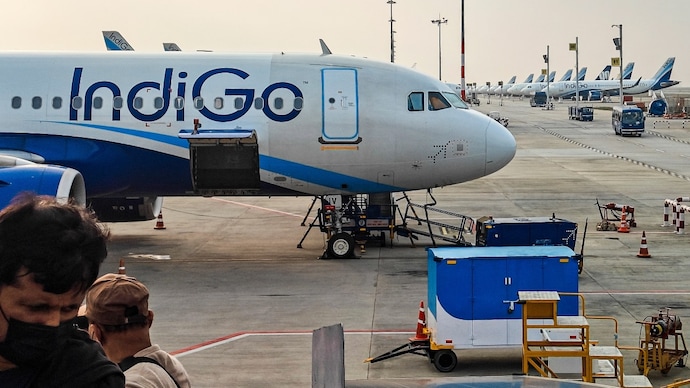
India’s aviation sector recently witnessed one of its most disruptive episodes in years, as budget carrier IndiGo cancelled thousands of flights in a short span of time, leaving passengers stranded across the country. The crisis has not only raised questions about operational preparedness and consumer protection but has also drawn the attention of India’s competition regulator, which is now reviewing allegations of antitrust violations against the airline.
Table of Contents
ToggleA Crisis Triggered by Mass Cancellations
Earlier this month, IndiGo cancelled nearly 4,500 flights due to poor pilot roster planning, an internal issue that rapidly snowballed into a nationwide aviation crisis. Tens of thousands of passengers were affected, with travel plans thrown into disarray across major and regional routes. Airports witnessed long queues, frustrated travelers, and a surge in complaints related to refunds, rebookings, and lack of communication.
The scale of the disruption was unprecedented for a single airline in India. Given IndiGo’s extensive network and dominant presence, the cancellations had a cascading effect on the entire aviation ecosystem, including airport operations, connecting flights, and ticket pricing across competing carriers.
Market Dominance Under Scrutiny
IndiGo controls over 60% of India’s domestic aviation market, making it the single largest airline in the country. Along with Air India, the airline forms part of a near-duopoly that together commands more than 90% of the domestic market. While such concentration has helped airlines achieve scale and cost efficiencies, it also raises concerns about reduced competition and vulnerability to systemic shocks.
The recent disruptions highlighted these risks clearly. With limited alternatives available at short notice, many passengers found themselves at the mercy of sharply rising fares. As demand outstripped supply due to mass cancellations, ticket prices on remaining flights surged, prompting government intervention in the form of temporary fare caps.
Allegations of Antitrust Violations
India’s competition regulator, the Competition Commission of India (CCI), confirmed that it has taken cognisance of information filed against IndiGo in the context of the recent disruptions. The regulator has initiated a preliminary assessment to determine whether the airline’s actions violated competition laws.
Although the CCI has not disclosed the full details of the allegations, one complaint alleges that IndiGo cancelled confirmed tickets and subsequently offered alternative seats at significantly higher prices. Such conduct, if proven, could be interpreted as an abuse of dominant market position, a serious violation under India’s competition framework.
The complainant has argued that passengers were left with little choice but to accept inflated fares due to IndiGo’s market dominance and the lack of sufficient competition on several routes.
buycbdblog.com | thehousetips.com | brightlinemedia.net
topcasinoideas.com | digitalmarketingdeeply.com
Impact on Passengers and Public Trust
For passengers, the crisis went beyond inconvenience. Many travelers reported missing important events, business commitments, and connecting international flights. While airlines often cite operational challenges, consumers expect robust contingency planning from market leaders.
The episode has also affected public trust in the aviation sector. Budget airlines have long marketed themselves on reliability and affordability. When cancellations are followed by steep fare increases, it creates a perception of unfairness and exploitation, especially during periods of limited alternatives.
Consumer advocacy groups have argued that dominant airlines have a higher responsibility to ensure transparency, fair pricing, and timely communication during disruptions.
Regulatory Powers and Possible Outcomes
The CCI’s review is currently at an initial stage. If the regulator finds sufficient grounds, it can order a detailed investigation into IndiGo’s conduct. Such probes typically examine whether the airline misused its market power to distort competition or harm consumers.
If wrongdoing is established, the CCI has the authority to impose penalties, direct changes in business practices, and issue corrective measures. Even the initiation of a probe sends a strong signal to the aviation industry about the importance of compliance with competition laws.
At the same time, regulators must balance enforcement with the operational realities of airlines, particularly in a fast-growing market like India, where capacity constraints and workforce challenges are common.
Lessons for India’s Aviation Sector
The IndiGo episode has reignited debate about the structure of India’s aviation market. While consolidation has helped airlines survive in a highly competitive and cost-sensitive environment, excessive concentration can magnify the impact of operational failures.
Experts suggest that fostering greater competition, encouraging new entrants, and strengthening consumer protection mechanisms are essential for long-term stability. Airlines, especially dominant players, need to invest more in workforce planning, operational resilience, and crisis management systems.
A Turning Point for Accountability
As India’s aviation market continues to expand rapidly, incidents like this serve as a reminder that growth must be matched with accountability. The CCI’s review of alleged antitrust violations marks a critical moment for the sector, signaling that market dominance comes with heightened scrutiny.
For IndiGo, the outcome could shape its regulatory relationship and public perception in the years ahead. For the broader industry, it underscores the need for fair competition, robust planning, and a passenger-first approach in one of the world’s fastest-growing aviation markets.