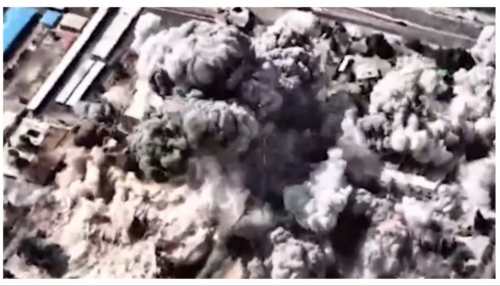
The United States military has claimed a significant military victory in the escalating Middle East conflict by announcing the complete destruction of the headquarters of Iran’s elite Islamic Revolutionary Guard Corps (IRGC) in Tehran. Described by U.S. officials as “cutting off the head of the snake,” the attack marks one of the most dramatic strikes against Iran’s core military infrastructure in decades and intensifies a conflict that has already drawn global attention and alarm.
The IRGC — long viewed by both U.S. and Western policymakers as a central driver of Iranian military power and regional influence — plays a pivotal role in Tehran’s security and strategic operations. Destroying its central headquarters signifies not only a tactical blow to its command and control capabilities but also a sharp expansion of direct confrontation between the United States and Iran.
Table of Contents
ToggleWhat the U.S. Has Announced
According to official statements from the U.S. military, a precision strike was carried out in Tehran that resulted in the total destruction of the IRGC’s main headquarters building. In announcing the operation, U.S. officials described the strike in forceful terms, stating that it effectively eliminated the IRGC’s central operational hub — a symbolic and strategic objective. The phrase “cut off the head of the snake” has been used by senior U.S. officials to underscore the perceived importance of degrading Tehran’s military leadership infrastructure.
The strike was reportedly part of broader military actions involving several high-value targets, and came at a time when tensions between Tehran and Washington — already high amid wider regional conflict — have reached new heights. The attack also follows other coordinated offensives in the region, including strikes on missile systems and military installations.
The IRGC’s Role and Importance
The Islamic Revolutionary Guard Corps was created after the 1979 Islamic Revolution to protect the newly established Islamic Republic and serve as a parallel military force alongside Iran’s regular army. Over time, it evolved into a powerful institution encompassing ground forces, naval units, intelligence components, and strategic command centers responsible for both external operations and internal security.
The IRGC is distinct from Iran’s conventional military in that it answers directly to the nation’s supreme leadership and plays a central role in shaping military policy, regional deployments, and political strategy. Its reach extends across several countries in the Middle East, where affiliated militias and paramilitary groups operate. As such, the IRGC has been fundamental to Iran’s defense strategy as well as its projection of influence in Iraq, Syria, Lebanon, and elsewhere.
Targeting the Headquarters: What It Means
Destroying the IRGC headquarters in Tehran, framed as “cutting off the head,” carries both symbolic and practical repercussions:
1. Disrupting Command and Control:
Military headquarters serve as nerve centers for planning, communications, and operational coordination. Their destruction can substantially disrupt hierarchical decision-making and degrade the ability to coordinate complex military responses.
2. Psychological Impact:
In strategic messaging, targeting a symbolic locus of military power signals resolve and capability. For U.S. officials, emphasizing the destruction of the headquarters is intended to demonstrate strength and determination to degrade Iran’s military capability.
3. Regional Power Dynamics:
This action may shift power balances in the region, emboldening U.S. allies and partners while directly challenging Tehran’s sense of security and influence.
Reactions and Regional Implications
The strike has triggered a range of reactions across the international community:
United States:
U.S. officials have stood by the operation, asserting that it was lawful under the current state of conflict and vital to national security interests. The language used by senior leaders frames the action as a decisive blow against an institution the U.S. views as instrumental in past attacks on American forces and interests.
Iran:
Tehran has condemned the strike as an act of aggression and has promised robust retaliation. Iranian leadership, including political and military authorities, has emphasized that such attacks will not diminish their resolve. There are reports of retaliatory rocket and missile fire from Iranian proxies against allied positions, further escalating the conflict.
Regional Powers:
Neighboring states are watching closely, concerned about wider regional escalation. Gulf countries, European allies, and international organizations have expressed varying degrees of concern, urging de-escalation and diplomatic efforts to prevent a broader conflagration.
Linkages to Broader Conflict
The destruction of the IRGC headquarters is not an isolated incident but part of a broader pattern of military action involving multiple actors. Reports indicate continued exchanges of fire between Iranian forces and U.S. partners in the region, including Israel and allied militias. Hezbollah, for example, has reportedly fired rockets at Israel in recent days, feeding into a cycle of action and reaction.
Furthermore, U.S. military leverage and strategy have focused on disrupting not just physical infrastructure but also intelligence networks and leadership elements, aiming to weaken Tehran’s ability to coordinate its military and proxy forces across the Middle East.
Legal and Ethical Considerations
Such strikes raise significant debates about international law and military conduct:
-
Legality: Supporters argue that in the context of active conflict and threats to national security, targeting military infrastructure is justified under international law.
-
Civilian Safety: Critics are concerned about the risks posed to civilians and non-combatants, as well as the potential for further civilian casualties if hostilities widen.
-
Long-Term Consequences: The strike’s aftermath could shape not only immediate military outcomes but also long-term diplomatic relations and regional stability.
These considerations highlight the complex balance between strategic objectives and humanitarian implications.
What Happens Next?
The destruction of the IRGC headquarters signifies a new phase in the ongoing confrontation. Likely developments include:
-
Escalation or Retaliation: Tehran may pursue further military responses, either directly or through allied militias.
-
Diplomatic Pressure: Global powers including the United Nations may intensify calls for ceasefires or negotiations.
-
Shifts in Regional Alliances: Neighboring states may reassess their positions and diplomatic alignments.
-
Domestic Political Repercussions: In both the U.S. and Iran, internal politics may influence how leaders frame and respond to the conflict.
The dynamics of this crisis remain fluid, with the potential for rapid changes in military and diplomatic engagements.
Conclusion
The United States’ announcement that it has destroyed the Islamic Revolutionary Guard Corps headquarters in Tehran represents a significant escalation in an already volatile regional conflict. Framed as “cutting off the head of the snake,” the operation underscores the strategic importance the U.S. places on degrading Tehran’s military command infrastructure. This move carries immediate tactical implications and broader geopolitical consequences spanning military, legal, and diplomatic arenas.
As the situation continues to evolve, global actors will be keenly observing the conflict’s trajectory — balancing concerns over security, sovereign rights, and human cost. What remains clear is that the destruction of such a central command center marks a turning point in the confrontation between the United States and Iran, with ramifications that extend well beyond the immediate battlefield.
modastor.com modastor.com modastor.com modastor.com modastor.com modastor.com modastor.com modastor.com modastor.com modastor.com modastor.com modastor.com modastor.com modastor.com modastor.com modastor.com modastor.com modastor.com modastor.com modastor.com modastor.com modastor.com modastor.com modastor.com modastor.com modastor.com modastor.com modastor.com modastor.com modastor.com modastor.com modastor.com modastor.com modastor.com modastor.com modastor.com modastor.com modastor.com modastor.com modastor.com modastor.com modastor.com modastor.com modastor.com modastor.com modastor.com modastor.com modastor.com modastor.com modastor.com modastor.com modastor.com modastor.com modastor.com modastor.com modastor.com modastor.com modastor.com modastor.com modastor.com modastor.com modastor.com modastor.com modastor.com modastor.com modastor.com modastor.com modastor.com modastor.com modastor.com modastor.com modastor.com modastor.com modastor.com modastor.com modastor.com modastor.com modastor.com modastor.com modastor.com modastor.com modastor.com modastor.com modastor.com modastor.com modastor.com modastor.com modastor.com modastor.com modastor.com modastor.com modastor.com modastor.com modastor.com modastor.com modastor.com modastor.com modastor.com modastor.com modastor.com modastor.com modastor.com modastor.com modastor.com modastor.com modastor.com modastor.com modastor.com modastor.com modastor.com modastor.com modastor.com modastor.com modastor.com modastor.com modastor.com modastor.com modastor.com modastor.com modastor.com modastor.com modastor.com modastor.com modastor.com modastor.com modastor.com modastor.com modastor.com modastor.com modastor.com modastor.com modastor.com modastor.com modastor.com modastor.com modastor.com modastor.com modastor.com modastor.com modastor.com modastor.com modastor.com modastor.com modastor.com modastor.com modastor.com modastor.com modastor.com modastor.com modastor.com modastor.com modastor.com modastor.com modastor.com modastor.com modastor.com modastor.com modastor.com modastor.com modastor.com modastor.com modastor.com modastor.com modastor.com modastor.com modastor.com modastor.com