Apple is once again working on a major upgrade that could change how people use their iPhones. According to reports, the company is developing new satellite-based features that will allow iPhones to send messages and use Maps — even when there is no mobile signal or Wi-Fi connection.
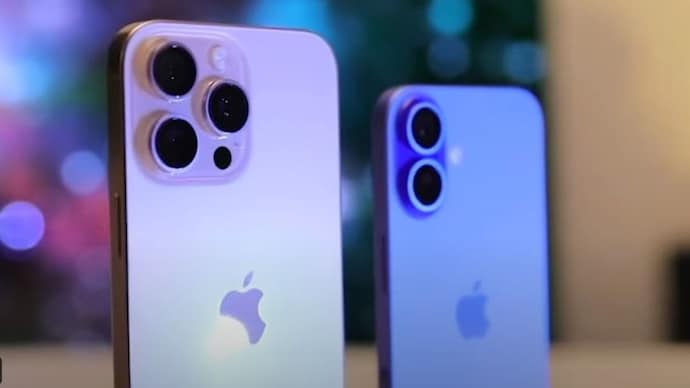
This move shows Apple’s growing focus on making iPhones more reliable and useful during emergencies, outdoor travel, and remote situations where normal mobile networks do not work.
What Are Satellite Features?
Satellite features use signals from satellites orbiting the Earth to connect devices directly, instead of relying on mobile towers. This allows communication even from remote locations — such as deserts, forests, mountains, or at sea — where mobile signals are weak or unavailable.
Currently, Apple already provides Emergency SOS via satellite, which was introduced with the iPhone 14 series. This feature lets users send emergency messages to authorities even without mobile networks. However, the upcoming update is expected to take this much further.
What’s Coming Next
According to leaks and insider reports, Apple is developing satellite support for Apple Maps and iMessage (Messages app). This means users could soon be able to:
-
Send text messages even in no-signal areas.
-
Share location or navigation data through Maps without needing mobile internet.
-
Possibly make limited voice or data connections through satellite in the future.
If this happens, iPhones will become even more useful for travelers, hikers, and people in rural or disaster-prone regions.
wheeloffortuneonline.co | icosmin.com | famevaults.com
houserenovant.com | homesfact.com
Why It Matters
One of the biggest challenges smartphone users face is staying connected when there’s no signal. Whether it’s a road trip in the hills or a power outage in a remote area, losing network access can be frustrating — and even dangerous in emergencies.
Apple’s plan aims to fix this problem by giving users a basic connection no matter where they are. It would make iPhones one of the most reliable communication tools in the world.
Experts believe this feature could also be a life-saving tool during natural disasters like floods, earthquakes, or cyclones — when mobile networks often collapse.
How It Might Work
Just like Emergency SOS via satellite, the new system will likely rely on low-Earth orbit (LEO) satellites. These satellites are much closer to Earth than traditional communication satellites, allowing for faster and more reliable connections.
When you try to send a message or load a map in an area without mobile coverage, your iPhone could automatically connect to a satellite. The screen may guide you to point the device toward a clear sky so it can align with the nearest satellite.
While data speeds will not match mobile or Wi-Fi networks, they’ll be enough for essential communication — like sending texts, sharing locations, or using Maps for directions.
Possible Challenges
Despite the excitement, there are some challenges Apple might face:
-
Cost: Using satellite services can be expensive. Apple might need to partner with companies like Globalstar or SpaceX’s Starlink for global coverage.
-
Availability: The feature might launch first in select countries and expand gradually.
-
Battery usage: Satellite connections require more power, so Apple will have to manage battery efficiency carefully.
-
Privacy and security: Apple will likely use end-to-end encryption to ensure satellite messages are as private as regular iMessages.
What Experts Say
Tech analysts believe this is part of Apple’s long-term plan to create a completely self-reliant communication ecosystem — one that doesn’t depend on telecom operators.
“Apple has always been focused on safety and innovation,” says Ben Wood, a tech industry expert. “The next step is to make connectivity universal — even without traditional networks.”
He adds that Apple’s strong ecosystem, combined with satellite capabilities, could soon make iPhones not just smart but also globally connected — anywhere, anytime.
What It Means for Users
For most users, this will be a major upgrade in convenience and safety. Imagine being able to:
-
Message your family while trekking in the Himalayas.
-
Get directions when driving through rural areas.
-
Send an SOS if your car breaks down in a no-signal zone.
-
Stay connected during natural disasters or power cuts.
This would also be a major boost for people living in rural areas of India, Africa, and South America, where network connectivity is still limited.
When Will It Launch?
While Apple has not officially confirmed the launch date, reports suggest the new satellite features may arrive with the iPhone 17 or iPhone 18 series — possibly in late 2025 or early 2026.
Apple is said to be working with satellite network providers to test stable and affordable service. The company may also introduce a subscription plan for advanced satellite functions, similar to how Emergency SOS is free for the first two years.
The Bigger Picture
Apple’s move comes as part of a global trend toward satellite connectivity in smartphones. Other brands like Huawei, Samsung, and Google are also testing similar systems.
Elon Musk’s Starlink and Amazon’s Project Kuiper are racing to expand satellite networks for broader global internet access. This means the next big revolution in technology might not be about 5G or 6G — but direct-to-satellite connectivity.
If Apple succeeds, it will once again redefine the smartphone industry — just as it did with the touchscreen, App Store, and Face ID.
Conclusion
Apple’s new satellite tv for pc project could be one of the most important developments in phone recording. It promises to make iPhones extra powerful, reliable, and lifestyle-saving — especially in areas that don’t get cell signals.
With each new innovation, Apple seems to blur the line between technology and history and fiction. And this time, it’s not about faster phones or better cameras – it’s about staying connected, regardless of which one you’re on.
famevaults.com famevaults.com famevaults.com famevaults.com famevaults.com famevaults.com famevaults.com famevaults.com famevaults.com famevaults.com famevaults.com famevaults.com famevaults.com famevaults.com famevaults.com famevaults.com famevaults.com famevaults.com famevaults.com famevaults.com famevaults.com famevaults.com famevaults.com famevaults.com famevaults.com famevaults.com famevaults.com famevaults.com famevaults.com famevaults.com famevaults.com famevaults.com famevaults.com famevaults.com famevaults.com famevaults.com famevaults.com famevaults.com famevaults.com famevaults.com famevaults.com famevaults.com famevaults.com famevaults.com famevaults.com famevaults.com famevaults.com famevaults.com famevaults.com famevaults.com famevaults.com famevaults.com famevaults.com famevaults.com famevaults.com famevaults.com famevaults.com famevaults.com famevaults.com famevaults.com famevaults.com famevaults.com famevaults.com famevaults.com famevaults.com famevaults.com famevaults.com famevaults.com famevaults.com famevaults.com famevaults.com famevaults.com famevaults.com famevaults.com famevaults.com famevaults.com famevaults.com famevaults.com famevaults.com famevaults.com famevaults.com famevaults.com famevaults.com famevaults.com famevaults.com famevaults.com famevaults.com famevaults.com famevaults.com famevaults.com famevaults.com famevaults.com famevaults.com famevaults.com famevaults.com famevaults.com famevaults.com famevaults.com famevaults.com famevaults.com famevaults.com famevaults.com famevaults.com famevaults.com famevaults.com famevaults.com famevaults.com famevaults.com famevaults.com famevaults.com famevaults.com famevaults.com famevaults.com famevaults.com famevaults.com famevaults.com famevaults.com famevaults.com famevaults.com famevaults.com famevaults.com famevaults.com famevaults.com famevaults.com famevaults.com famevaults.com famevaults.com famevaults.com famevaults.com famevaults.com famevaults.com famevaults.com famevaults.com famevaults.com famevaults.com famevaults.com famevaults.com famevaults.com famevaults.com famevaults.com famevaults.com famevaults.com famevaults.com famevaults.com famevaults.com famevaults.com famevaults.com famevaults.com famevaults.com famevaults.com famevaults.com famevaults.com famevaults.com famevaults.com famevaults.com famevaults.com famevaults.com famevaults.com famevaults.com famevaults.com famevaults.com famevaults.com famevaults.com famevaults.com famevaults.com famevaults.com famevaults.com